Why Is Choosing the Correct Grade So Important When Working with a Laser?
If you use a laser sensor, profile sensor or laser marking device on your production line, the first thing that probably comes to your mind is "measurement accuracy", "speed" or "stability". What about “eye health”?
If you are interested in photography or have watched Better Call Saul, you will remember how lasers damage cameras and disrupt their functionality.
In fact, it is often invisible to the naked eye, but with a beam of light strong enough to shine directly into your eyes We are working. At this point, a technical detail called "laser class" It becomes a vital choice that protects your health.
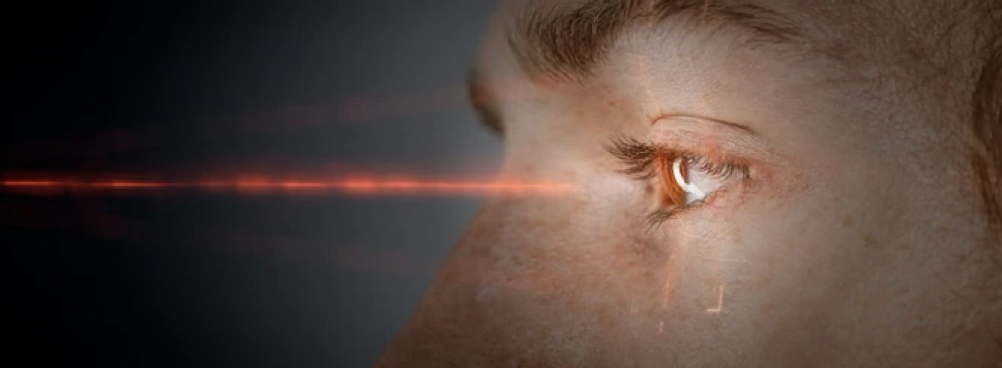
What is Laser Class and Why Should We Care?
Not all laser light is the same. Some are so weak that they do no harm, while others can cause serious damage to your retina without you noticing. This difference is defined by laser classes determined by international standards:
The laser class of a sensor is not just a technical data; It is directly related to the safety of people working with that device.
What Do Laser Classes Mean?
Laser classes, a laser device's according to their potential damaging effects on the eyes and skin represents the classification.
This classification is usually IEC 60825-1 is made according to the standard.
The basic laser classes are:
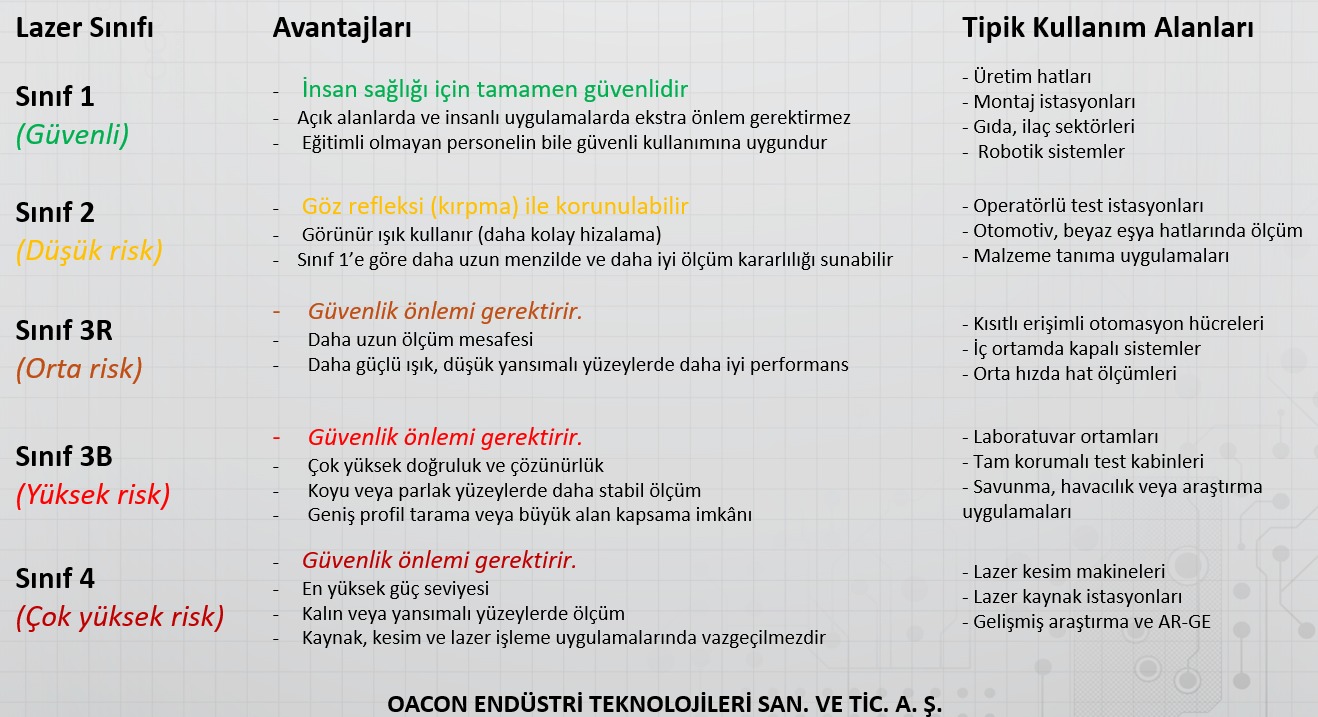
Class 1: It is safe. It does not harm eyes or skin in normal use.
Class 2: It uses visible light. Protection is possible with the blink reflex, but prolonged staring is dangerous.
Class 3R/3B: It may pose a serious risk to the eyes. It requires protective measures.
Class 4: It is dangerous for eyes and skin. It may even pose a fire risk. For industrial uses, it is used in limited areas and with absolute safety precautions.
Risks to Human Health
Even if laser beams are not visible It can cause irreversible damage to the retina. Especially in profiling devices where high-power lasers are used, Rays hitting the eyes directly or through reflection can cause serious eye damage.
In addition, long-term or improper exposure may cause symptoms such as headache and visual disturbances.
For this reason, when choosing a device in environments where there is a human operator, Systems with safe laser class should be preferred. This choice is critical, especially considering that workers in production areas may be unintentionally exposed to devices.
Advantages and Usage Areas According to Laser Classes
Laser Safety in Production: « It Doesn't Just End with Helmets and Gloves. »
When it comes to safety in the industry, physical measures often come to mind: barriers, warning signs, gloves, helmets... But in laser measurement systems, "seeing the invisible" should also be added to this list.
Because laser can affect even though it is not visible.
Especially:
- Operators performing manual control on the line,
- Maintenance personnel requiring external intervention,
- Teams with sensitive safety protocols working in the food or pharmaceutical industry are at risk for eye health.
We Can't Measure Health, But We Can Protect It
An advanced laser profile system; We can measure with micron precision, optimize production, increase quality... But no technology can restore eye health.
So when purchasing a sensor or installing a system, ask these simple questions:
"What is the laser class of this device? Is this class really safe for those working here?"
As Oacon, we develop solutions that consider both technology and people.
Because if there is something as important as measurement, it is being able to continue working healthily.