E3AS-HL Series CMOS Laser Distance Sensor
E3AS Series changes the way standard laser sensors are "used"
Omron E3AS-HL series provides reliable detection of difficult workpieces, reducing equipment design and commissioning time
If difficult-to-detect workpieces (curved, shiny or cast surfaces) cannot be detected correctly, the sensors must be re-selected or adjusted. E3AS-HL provides reliable detection of workpieces with curved, shiny or irregular surfaces
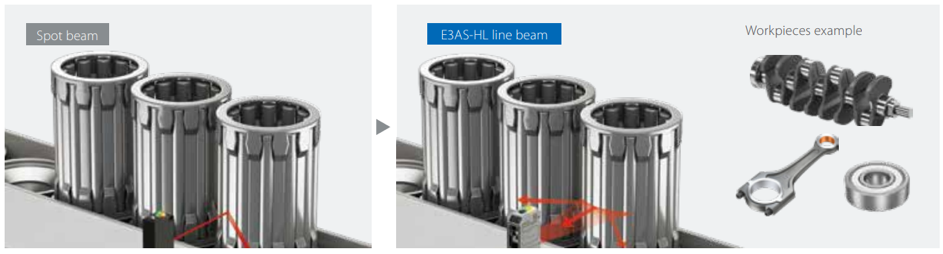
With traditional sensors, detection tends to be unstable as the detection distance varies depending on the type of material, its color, and its distance from the sensor. Virtually unaffected by material type or color, E3AS-HL Sensors do not require any adjustments for each workpiece.
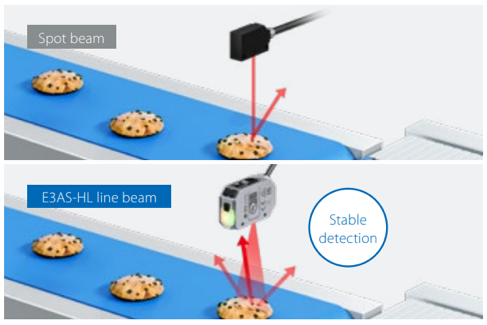
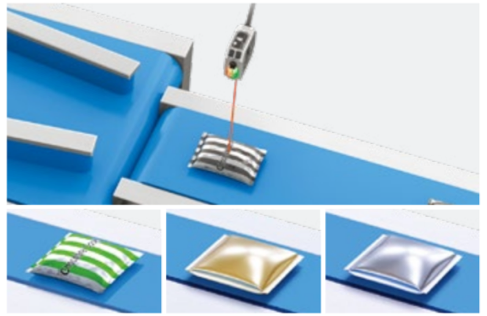
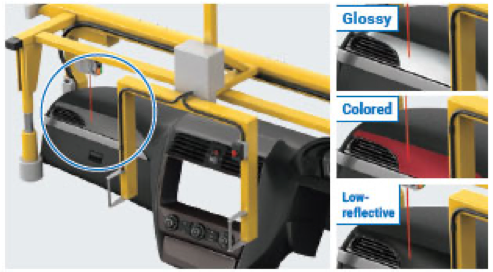
Reliable detection of differently colored or shiny materials
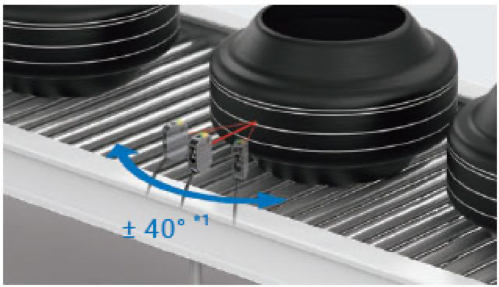
Light-absorbing parts are difficult to detect and mounting the sensor in the correct position is mandatory. E3AS-HL Sensors can be mounted at a wide angle, making installation easier.
The effects of lights and sunlight for cameras must be taken into account during design. E3AS-HL Sensors can be operated under 20,000 lx ambient illumination, which is best in class *2. This allows you to install sensors near the lights.
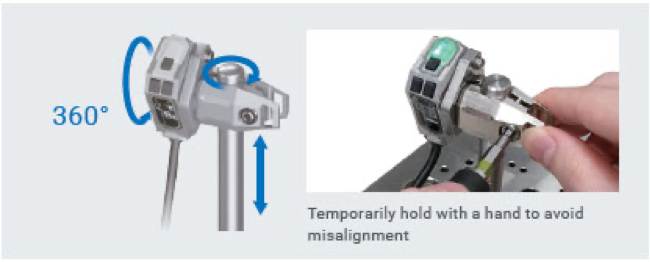
The optical axis can be easily adjusted in three directions: vertical, horizontal and angular.
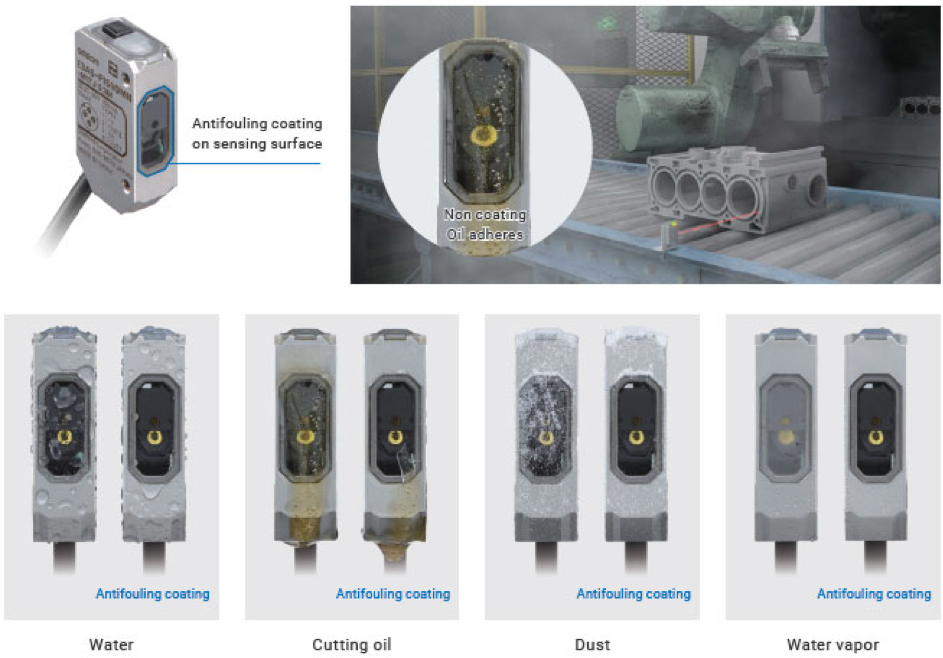
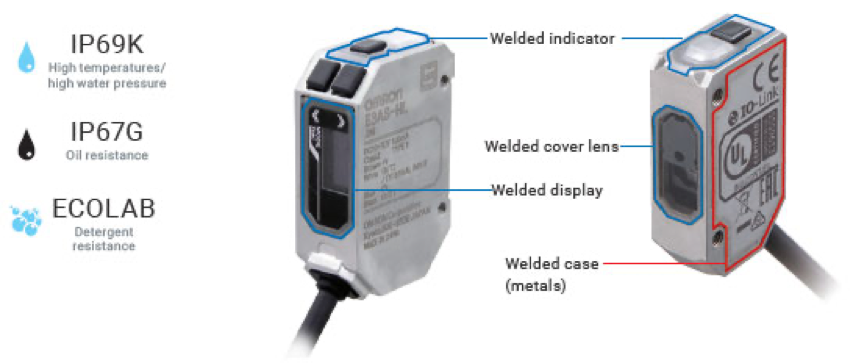
Thanks to the coating on the sensing surface, E3AS-HL provides stable operation even in harsh environments. [First in the industry]*[PATENT APPLICATION HAS BEEN MADE]*
When a sensor failure or breakage caused by the environment causes the line to stop during mass production, restarting may take a long time. With its protected sensing surface, the E3AS Series helps minimize line downtime and maximize uptime.
A dirty sensing surface can cause false detection due to the principle of photoelectric sensors. The E3AS Series features an industry-first paint coating on the sensing surface that prevents oil mist and dust from adhering to the sensing surface, as well as preventing the lens from fogging. This reduces false detection and the frequency of surface cleaning.
The use of an air blower greatly reduces the frequency of false detection because it prevents contamination of the sensing surface of sensors in enclosed, difficult-to-clean locations. [PATENTED]*2
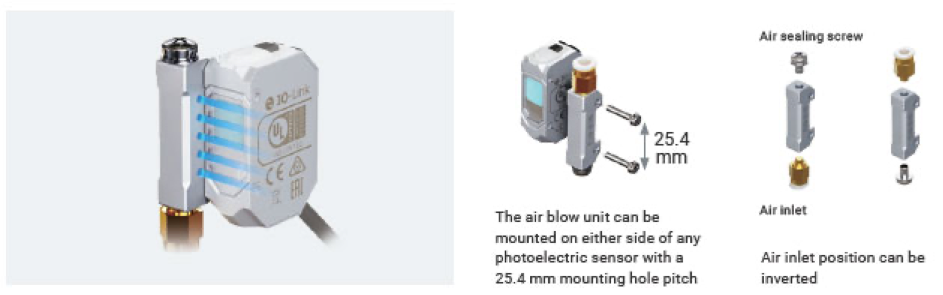
Front protection cover reduces sensor malfunctions
Weld spatter on the sensing surface or collision during operation can cause sensor failure and sometimes the sensor needs to be replaced. Installing the front protection cover prevents sensor malfunctions. If any problem occurs with the front protection cover, just replace the cover without the need to replace the sensor and rewire.
False detections due to environmental changes can be avoided [CMOS E3AS-HL]
After the production line layout is changed, false detection may occur due to the effects of lights on image sensors or nearby sensors.
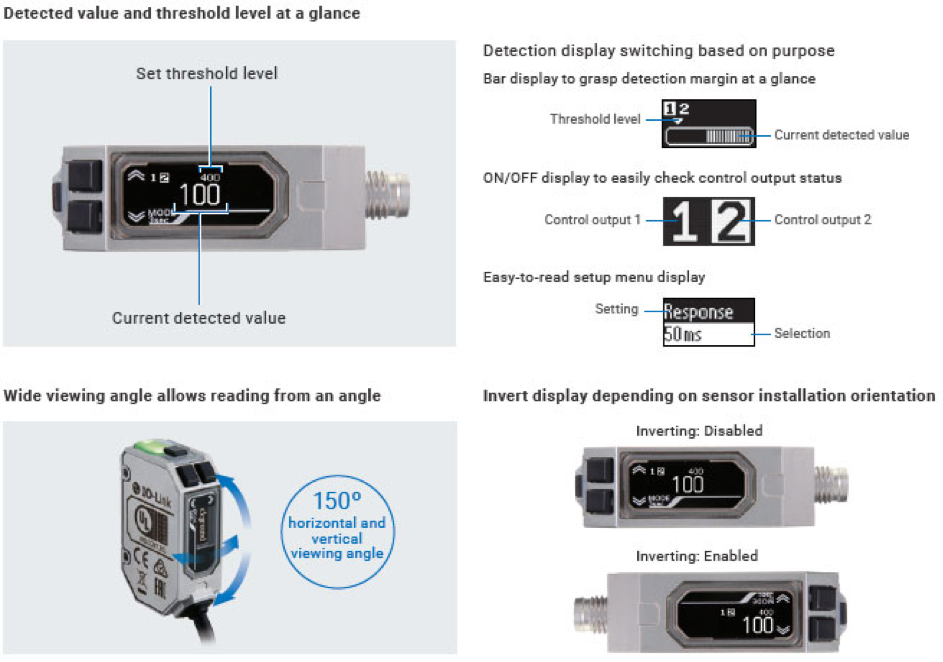
It provides easy, fast and optimum adjustment with OLED screen.
Displaying the threshold level and the detected value on the same screen makes threshold level adjustment easier. Additionally, the wide viewing angle and flipping screen allow field workers to view the screen easily.
Single teach button prevents inconsistent settings
Set the optimum threshold level easily and consistently using the Teach button.
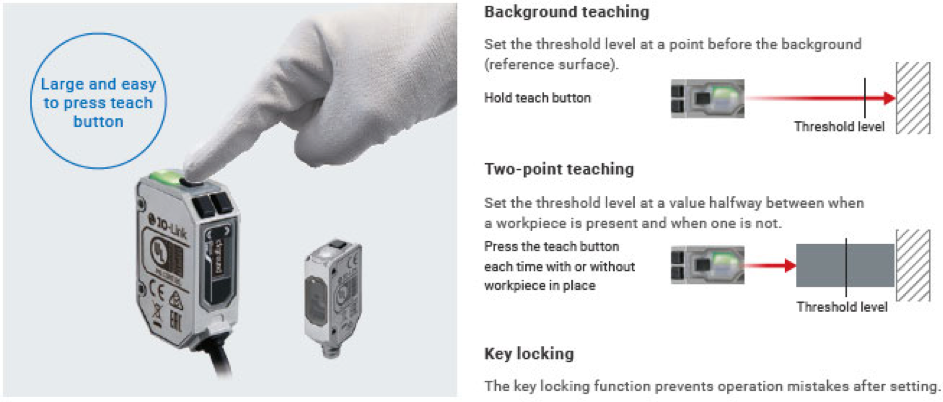
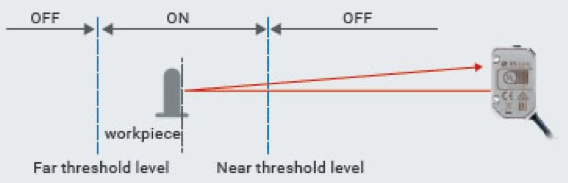
E3AS-HL sensors allow you to easily adjust upper and lower threshold levels by simply pressing and holding the button. This teaching is ideal for detecting the presence of workpieces without a background or within a specified distance range.
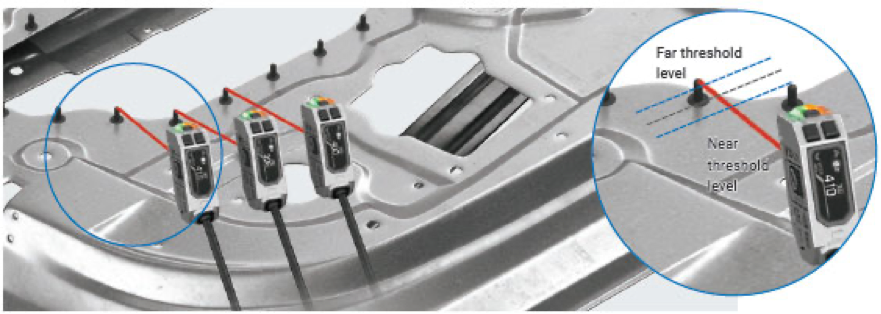
Simply press and hold the button to simultaneously adjust the threshold levels on the near and far sides of the workpiece position (reference position). This teaching is used to detect that workpieces are in a predetermined position.